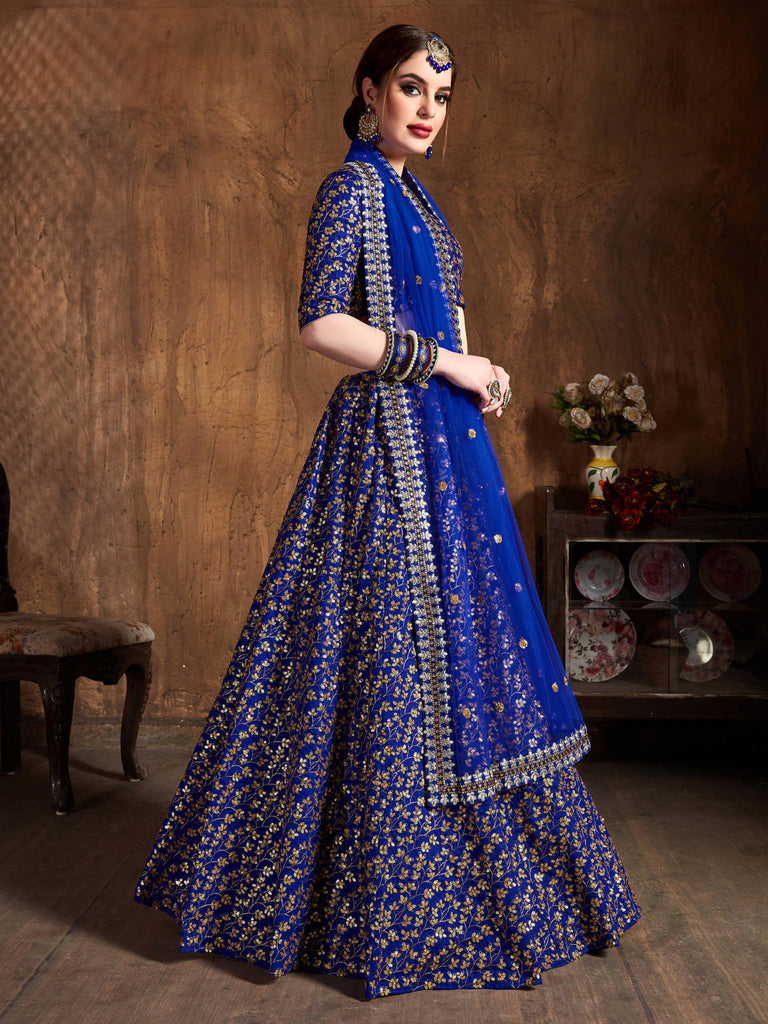
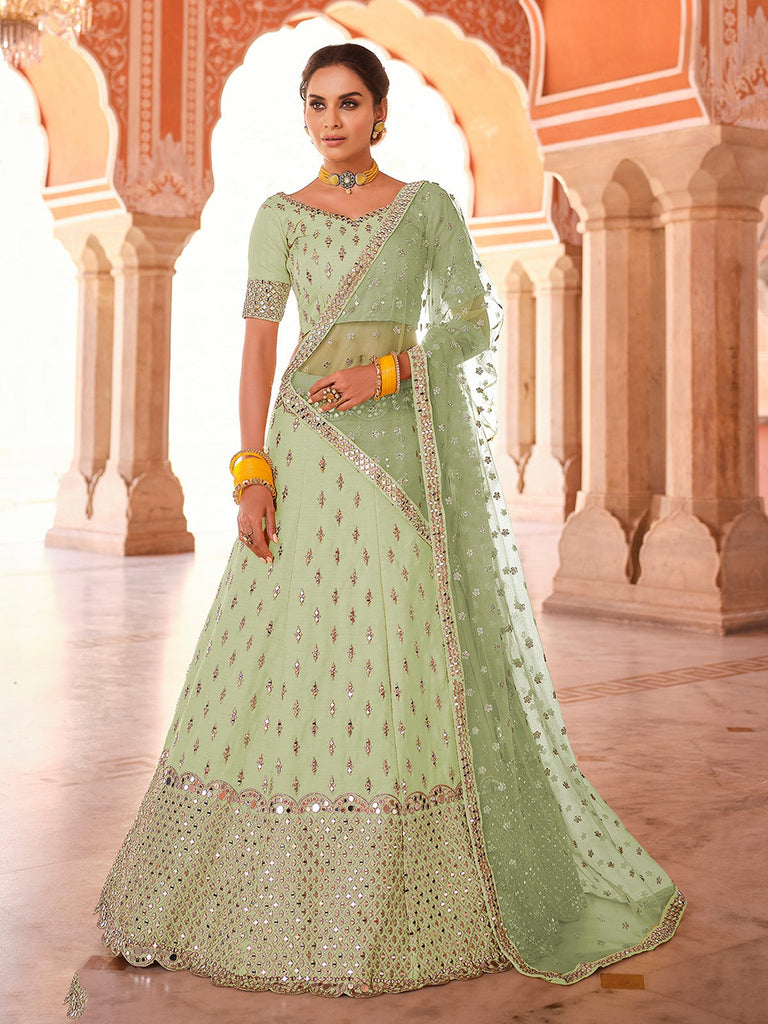
Choosing wedding-guest clothing often begins with a colour you enjoy, but the finished look also depends on the event setting, jewellery, comfort and the host’s dress code. A saree and a lehenga can both support many palettes; this guide focuses on wedding guest ethnic outfit colour pairing using ten genuine photographs of the six INAYA 7055 ClothsVilla lehenga choli designs. These are photographs of lehengas, not falsely labelled saree product images, and every image links to its corresponding outfit.
Start with the invitation, not an arbitrary colour rule
Check whether the invitation specifies any dress code or event activity. A yellow embroidered lehenga may be considered for a haldi-inspired look, but if turmeric will be applied directly to clothing, a washable outfit may be more appropriate. Green can suggest a mehndi-inspired palette, whereas blue and red offer distinct evening looks. These are suggestions rather than mandatory colours or statements about every wedding’s customs.

Blue: decide whether to emphasise or soften the colour
Silver-toned jewellery may create a cool-colour direction with blue; softer metallic accessories can create another feel. Rather than assuming the photograph reproduces exact tone, compare multiple genuine views and try your accessories against the physical outfit in the light of the event. The stitched blouse neckline can influence whether earrings or a necklace make the more comfortable focal point.


Green: let embroidery set the accessory level
Green can pair with gold-toned earrings for a festive palette; it can also be styled with understated pieces if you want the embroidery to remain central. The INAYA 7055 listings specify zari and sequin embroidery, so layering several reflective accessories may not be necessary. Accessories discussed here are styling suggestions and not included in the seller’s three-piece set.

Peach and pink: compare two softer colour directions
Peach can work with pearl-toned or discreet metallic accessories, while pink offers a related but distinct palette. Compare actual product photographs for how the outfit appears against each background. For a saree, follow the saree’s own fabric and blouse instructions rather than assuming it has the same construction as these lehenga examples. Consider your personal preference before relying on a colour trend.


Red: keep the guest’s comfort central
Red can create a striking traditional outfit palette, but not every wedding requires or excludes the same colours for guests. Ask the hosts when a custom matters. If your clothing has decorative sequins, check that bag fittings and bracelets will not snag its surface. Arrange a blouse fitting before deciding on an elaborate neckpiece.

Match your palette to a wearable fit
The six illustrated INAYA 7055 designs contain an art silk semi-stitched lehenga, art silk unstitched blouse fabric and soft net dupatta with zari and sequin embroidery. The supplier states blouse up to 42 for all; lehenga waist and length up to 42 for five colours, but up to 43 for peach. These are not a guarantee of finished fit. Art silk does not itself establish pure silk composition. Ask your tailor to assess measurements and allow time for sewing and adjustments.


Colour pairing checklist
- Read the invitation’s dress code and understand the actual event activities.
- Choose a colour that you enjoy and compare more than one actual product photograph.
- Consider whether jewellery and dupatta placement will be comfortable.
- Check garment construction and tailor requirements before ordering.
- Confirm live price, availability, shipping and seller conditions on the relevant product.
The ClothsVilla INAYA six-colour guide provides an additional product-specific reference. The photos here depict lehengas only, not sarees.