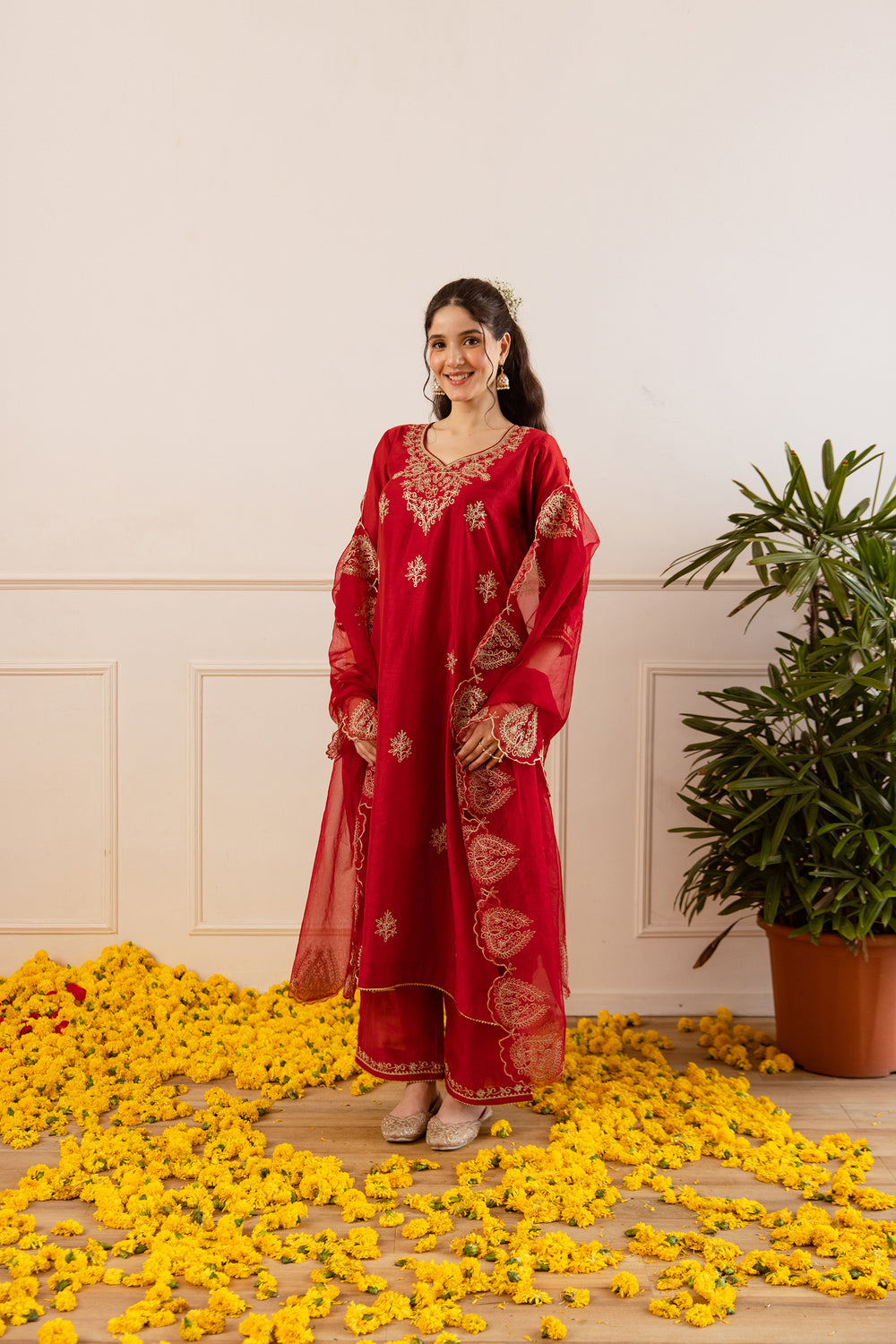
If you have been shopping for festive ethnic wear for women this season, you have probably noticed more full sleeves Anarkali suits than usual on the racks. Ask around, and most women will tell you the same thing: sleeves that actually cover the arms make a suit easier to wear for longer stretches, whether that is a five-hour wedding or a two-hour puja where you are constantly getting up and sitting down.
Asrumo has been designing full sleeves Anarkali suits for a while now, and this guide covers what to actually look for, what is trending this season, and how to wear the look without it feeling stiff or overdressed.
Why More Women Are Choosing Full Sleeves This Season
A few years ago, sleeveless and cap-sleeve Anarkalis were the default. That has shifted, and it is not just about coverage.
Here is what buyers are actually asking for:
Sleeves that do not need constant readjusting through a long function
No need for a separate jacket or shawl at temple visits or family events
A dupatta that sits properly on the shoulder instead of sliding off a bare arm
Options that work for both a 35-degree wedding and a cooler evening one
Full sleeves Anarkali suit trends are not a short-term shift either. Designers have kept building on this for two festive seasons running, which tells you it is not a one-off, and it is now firmly part of the broader anarkali suit trends shaping festive wear anarkali collections.
What the Latest Full Sleeves Anarkali Suit Designs Actually Look Like
The sleeve itself has become the design detail, not just the part that covers the arm. This is where a modern full sleeves Anarkali suit really sets itself apart from older, plainer cuts.
The Sleeve Is Where the Detail Lives Now
A few cuts you will see repeated across collections this year:
Bell sleeves that flare out from the elbow down
Puffed shoulders with a tighter forearm and fitted cuff
Contrast piping or thread work running along the wrist
Sheer sleeve panels over a lining, so you get the coverage without the heat
Asrumo’s newer pieces treat the sleeve this way, so it is not just an extension of the same fabric as the body of the suit.
Cotton Is Back in a Big Way
A cotton Anarkali suit is one of the most searched options right now, and it makes sense. Cotton breathes, it does not cling, and it survives an afternoon wedding lunch without looking crushed by evening.
For evening functions, georgette and muslin blends hold their flare better and move well when you are dancing at a sangeet.
Colours Have Opened Up Beyond Reds and Maroons
Jewel tones are still the go-to for wedding ceremonies, but brighter, warmer shades are showing up more in festive wear anarkali collections now. A yellow Anarkali dress has become a common choice for Haldi functions specifically, mostly because it photographs well and reads as celebratory without trying too hard.
Picking the Right Style for the Occasion
Not every event calls for the same cut. Here is a rough guide.
For Everyday Festive Wear
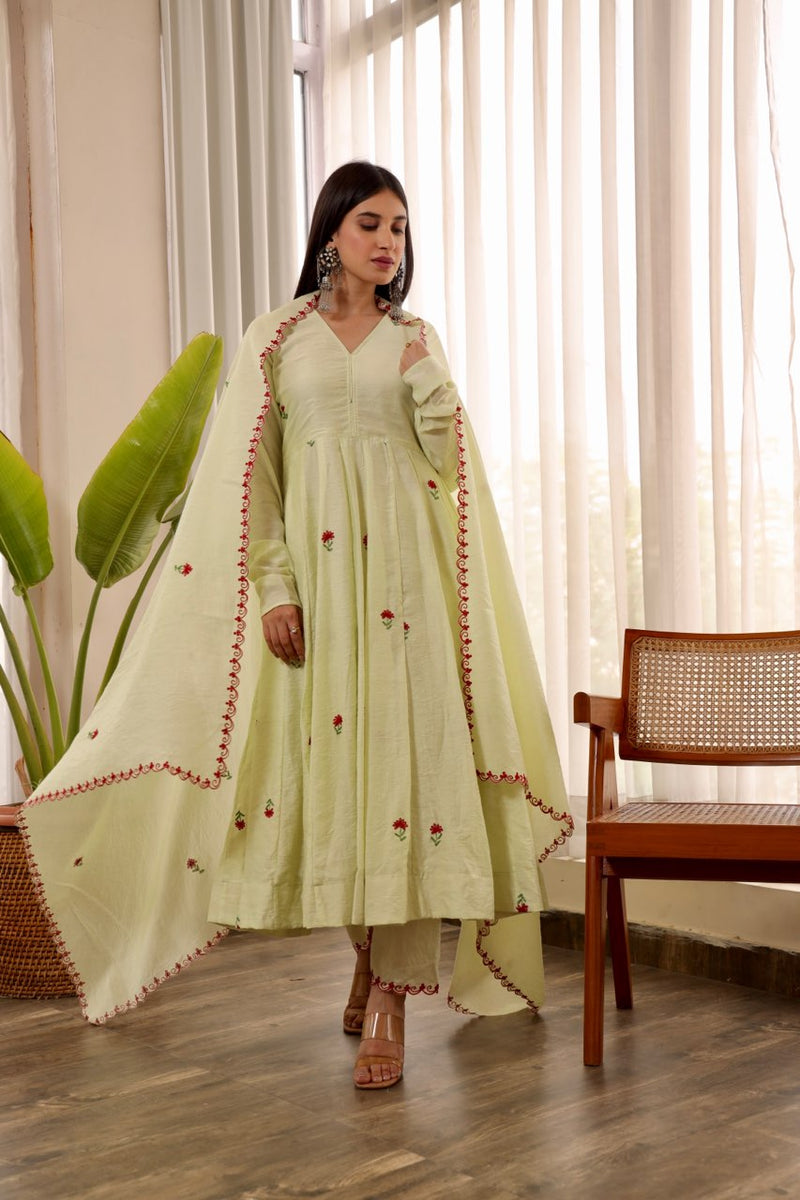
For Diwali, Navratri, or Karva Chauth, a soft pastel cotton Anarkali like this pale lemon set works well for everyday festive occasions. The scattered floral embroidery and scalloped border keep it looking festive without being heavy, while the mid-flare, cotton fabric lets you move around, bend for aarti, and sit on the floor comfortably. It’s the kind of easy, breathable pick you can wear through a full day of running between rituals and family visits.
For Wedding Functions as a Guest
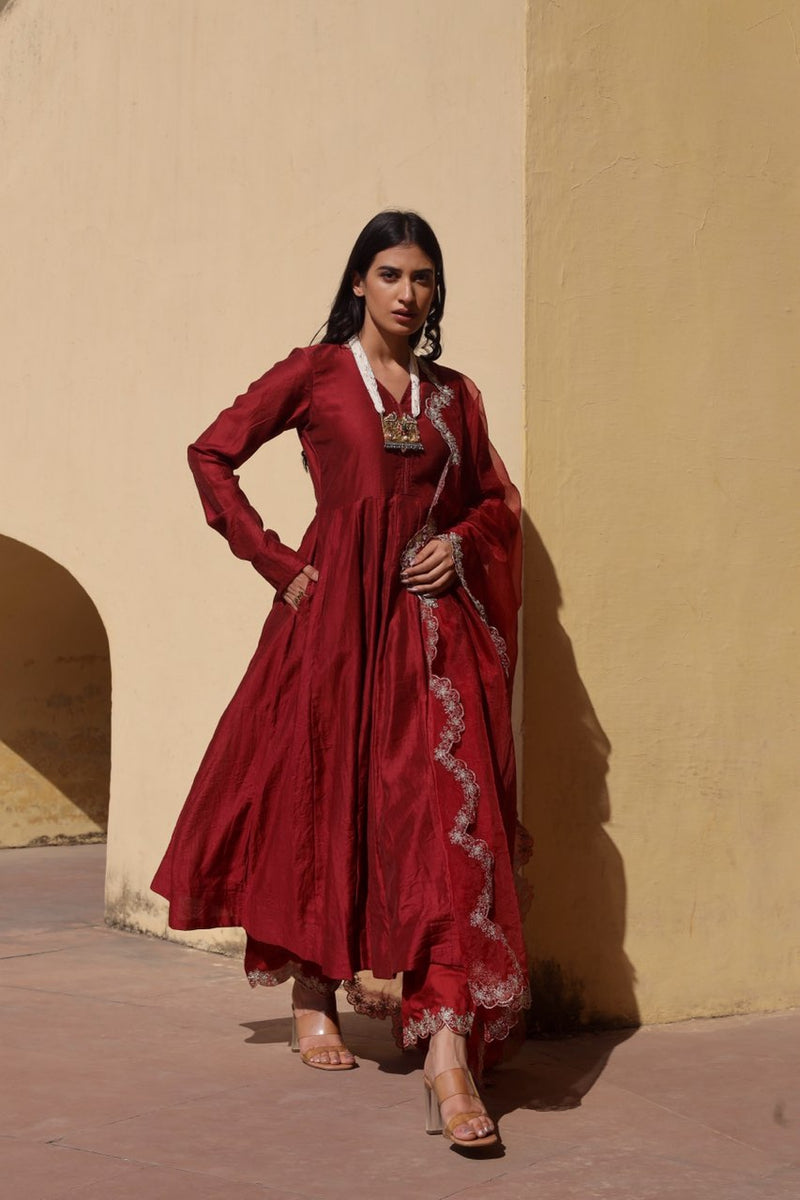
Weddings are where a designer full sleeves Anarkali suit earns its price. For an anarkali for wedding functions, go for a rich solid colour with delicate lace trim along the sleeves and hem, paired with a flared, floor-length silhouette and structured yoke. Deep maroon or wine tones photograph beautifully and pair well with statement jewellery. This kind of understated detailing holds up in photos far better than heavy embroidery.
For Sangeets and Parties
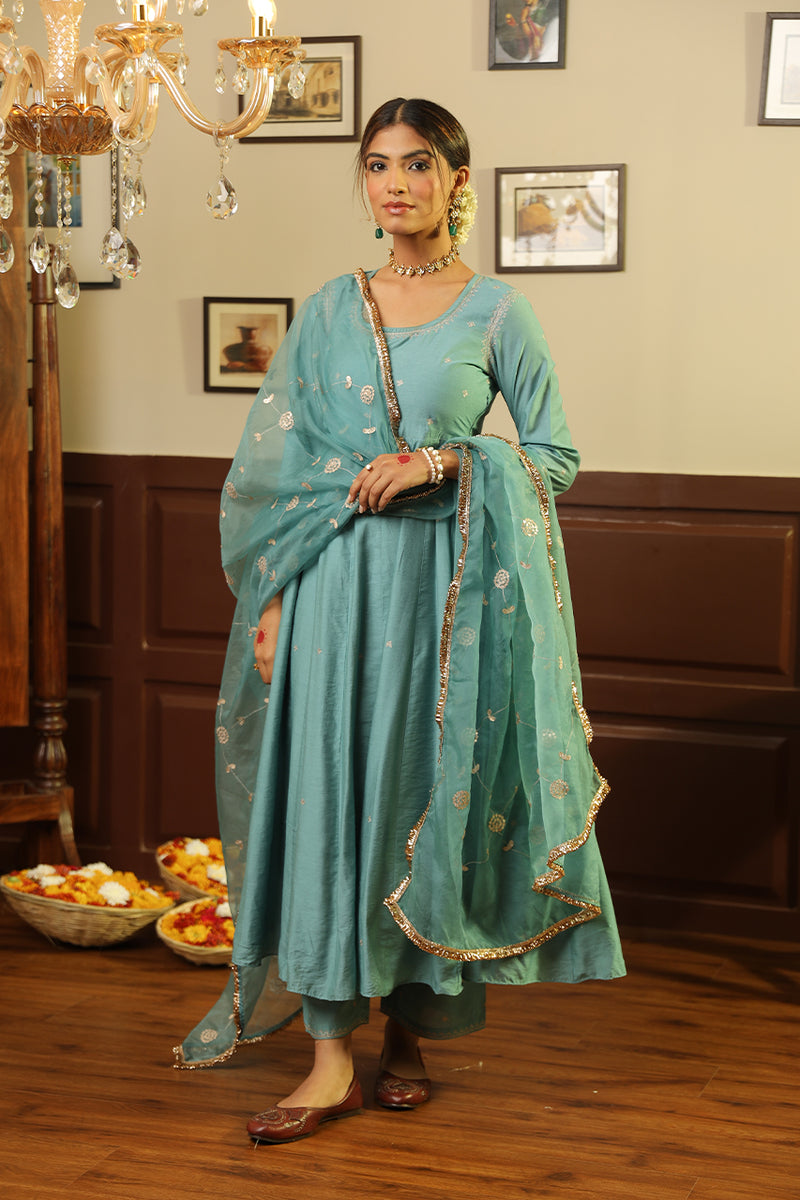
A party wear Anarkali like this sea-green silk set keeps things simple through the body, with fitted full sleeves and a clean round neckline instead of heavy detailing. The real statement is the dupatta — sheer organza with scattered gold motifs and a scalloped gota border, draped over one shoulder to catch the light. Paired with matching straight pants, it reads festive without feeling like a full wedding outfit.
Styling Tips for a Full Sleeves Anarkali Suit
The suit is only part of the outfit. A few things that actually change how it looks:
Dupatta
If the sleeves already have heavy detailing, keep the dupatta simple. A plain or lightly bordered dupatta lets the sleeve work stand out instead of competing with it.
Footwear
Block heels or juttis work better with a flared Anarkali than stilettos do. Thin heels tend to catch in a floor-length hem when you are walking, especially on uneven ground like a lawn or a temple courtyard.
Layering in Cold Weather
For a winter wedding, full sleeves already give you a head start on staying warm. Throw a light shawl or cape over it rather than a heavy jacket that hides the sleeve detail you paid for.
What to Check Before You Buy
A few things worth confirming before you add an Anarkali suit to your cart:
Fabric composition, especially if cotton is a priority for you
Flare measurement at the hem, since this changes how it sits when you are seated
Actual sleeve length, since “full sleeves” can mean anything from wrist-length to three-quarter depending on the brand
Care instructions, particularly for pieces with sequins or embroidery that cannot go through a regular wash
Asrumo lists these details on every product page so you are not guessing before you order.
The Bottom Line
A full sleeves Anarkali suit is not really a single-occasion outfit anymore. The same silhouette works for a temple visit, a sangeet, and a wedding lunch, as long as you get the fabric, flare, and sleeve style right for what you are attending.
Asrumo’s approach has been to keep the classic Anarkali shape but pay closer attention to the parts that make it wearable: sleeve construction, fabric weight, and finishing that holds up through a long day, whether you are shopping for festive wear anarkali or a modern full sleeves Anarkali suit for a wedding.
FAQ’s About Full Sleeves Anarkali Suits
Q1. Are full sleeves Anarkali suits too warm for summer weddings?
Not if you pick the right fabric. Cotton or cotton-blend Anarkali suits with lighter embroidery stay comfortable even in peak summer, since the issue is usually the fabric rather than the sleeve length itself.
Q2. Are full sleeves Anarkali suits suitable for weddings?
Yes. Full sleeves Anarkali suits are an excellent choice for weddings. Embroidered styles in fabrics like silk, Chanderi, or georgette work well for ceremonies such as the mehendi, sangeet, and reception, making them a reliable pick whenever you need an anarkali for wedding events.
Q3. How do I pick an Anarkali suit if I am attending a wedding as a guest?
Check the timing first. Daytime functions call for lighter fabrics like cotton. Evening functions can carry heavier fabrics like georgette or silk with more embroidery and detailing.
Q4. Can a full sleeves Anarkali suit be worn for festivals?
Absolutely. Full sleeves Anarkali suits are a popular choice for festivals such as Diwali, Raksha Bandhan, Navratri, and Eid because they offer both elegance and comfort as festive ethnic wear for women.
Q5. How do I style a full sleeves Anarkali suit?
Pair it with statement earrings, comfortable heels or juttis, a matching dupatta, and a clutch or potli bag. Keep accessories balanced to complement the outfit.
Q6. What jewellery pairs best with a full sleeves Anarkali suit?
Statement earrings, chandbalis, delicate necklaces, bangles, and traditional rings are popular choices. The jewellery should complement the neckline and embroidery of the outfit.