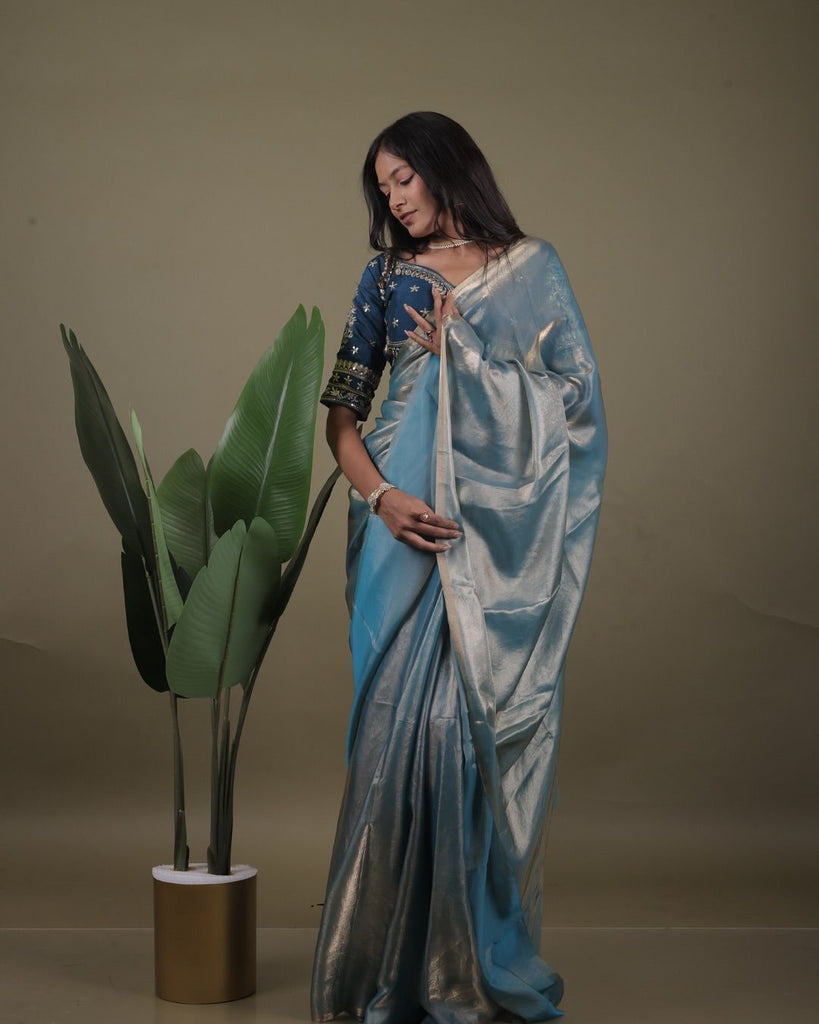
A day wedding puts every detail into clear natural light. Fabric texture, makeup finish, jewellery scale and colour undertones are easier to see than they are at night, which makes balance more important than simply adding sparkle. The best saree is one that photographs well and remains comfortable through ceremonies, greetings, meals and outdoor movement.
This guide focuses on day wedding saree from a shopper-first point of view: what to notice, what to ask, how to test the choice at home and how to avoid buying or tailoring around assumptions. Product examples are included as visual references; always use the live product page for the current fabric, included pieces, sizing, price and availability.
Start with the wedding time and venue
A morning temple ceremony, garden lunch and hotel ballroom call for different practical choices. Outdoor venues make heat, wind, grass and walking distance important, while indoor venues may let you use more structure or richer fabric.
Practical check: Use a full-length view and a close view before deciding. The close view tells you about finish, while the full view tells you about proportion. When the two impressions disagree, prioritise the way the complete outfit behaves on the body rather than the isolated decorative detail. In this part of the decision, keep the focus on day wedding saree rather than choosing only from a close-up image or a product name.

Pastels are useful but not mandatory
Pastels can look soft in daylight, but deeper colours also work beautifully when the fabric and jewellery are balanced. Choose a shade that gives enough contrast around your face rather than following a rule that day weddings require pale colours.
Practical check: Compare at least two options side by side instead of judging one item in isolation. Differences in scale, texture, stiffness and placement become much easier to notice when the alternatives are visible together. This is especially useful online, where marketing names can sound more different than the actual wearing experience. In this part of the decision, keep the focus on day wedding saree rather than choosing only from a close-up image or a product name.

Printed silk can bridge comfort and formality
Print can add visual detail without the weight of dense embroidery. A printed silk or silk-look saree can feel wedding-ready when the blouse and jewellery raise the formality, while still being easier to repeat for future events.
Practical check: Include movement in the decision. Walk, sit, raise both arms and turn once in the complete outfit whenever possible. A detail that looks perfect while standing may pull, shift or become uncomfortable after repeated movement, and those practical problems tend to matter more as an event gets longer. In this part of the decision, keep the focus on day wedding saree rather than choosing only from a close-up image or a product name.

Organza creates lightness with structure
Organza keeps visible body and can photograph beautifully in daylight, but it also needs room and careful pleating. Make sure you like the crispness in motion, not only in posed photographs, and plan pins before a windy outdoor event.
Practical check: Think about the supporting pieces at the same time. Blouse, lining, petticoat, dupatta, footwear and jewellery can change the balance of the main garment. A strong choice is one that works with pieces you already own or with additions that have more than one future use. In this part of the decision, keep the focus on day wedding saree rather than choosing only from a close-up image or a product name.

Use jewellery to frame the face in daylight
Portrait photographs make earrings, bindis and neckline jewellery highly visible. Choose one strong face-framing element, then let the rest support it. Extremely reflective jewellery can compete with heavily worked sarees under direct sun.
Practical check: Check care and maintenance before treating appearance as the only criterion. Delicate edges, heavy work, crisp fabrics and fluid surfaces can require different storage, cleaning and pressing. A garment that fits your maintenance habits is more likely to be reworn and stay presentable. In this part of the decision, keep the focus on day wedding saree rather than choosing only from a close-up image or a product name.

Keep makeup texture controlled
Natural light shows base texture clearly. Use the coverage and finish you are comfortable wearing for several hours, and test it near a window before the wedding. A well-prepared, comfortable base often photographs better than layers added only for intensity.
Practical check: Let the occasion set the threshold. A short photo-focused celebration can tolerate more structure or weight than a full day involving travel, meals and repeated sitting. Match the feature to the real schedule rather than assuming the most decorative option is automatically the most appropriate. In this part of the decision, keep the focus on day wedding saree rather than choosing only from a close-up image or a product name.

Choose a drape that survives greetings and photographs
Wedding guests spend hours standing, sitting, hugging relatives and moving between spaces. Secure the waist and pallu so the drape survives normal movement. A dramatic open pallu is beautiful only if you are comfortable managing it.
Practical check: If tailoring is involved, discuss the finished behaviour rather than only giving measurements. Show the tailor how you want the garment to move and where you expect the visual focus to sit. Small construction choices can affect comfort, drape and proportion even when the measurements are technically correct. In this part of the decision, keep the focus on day wedding saree rather than choosing only from a close-up image or a product name.

Plan footwear for outdoor surfaces
Grass, gravel and temporary flooring can make narrow heels difficult. Stable block heels, wedges, flats or juttis can be easier for outdoor day weddings. Set the saree length with the exact footwear before leaving home.
Practical check: For online purchases, separate confirmed specifications from styling shown in photographs. Read the product description, included-piece details and size information, and treat accessories on the model as styling unless the listing explicitly says they are included. This simple habit prevents many expectation mismatches. In this part of the decision, keep the focus on day wedding saree rather than choosing only from a close-up image or a product name.

Use one statement detail for close-up photos
A textured blouse, distinctive earring, border or pallu can give portraits a clear focal point. You do not need all four. Decide what you want the camera to notice first, then simplify competing details.
Practical check: Do a home test under the light and conditions closest to the event. Daylight, warm indoor light and phone flash can change how colour, shine and transparency appear. Take a short video as well as photographs because movement often reveals issues that a still image hides. In this part of the decision, keep the focus on day wedding saree rather than choosing only from a close-up image or a product name.

Carry a small refresh kit
A few practical items can save the look: safety pins, tissues, lip colour, a hair pin and blister protection. Keep the kit compact. Day weddings are already long, and a heavy bag becomes another thing to manage.
Practical check: Finally, ask whether the choice has a second life. The easiest pieces to rewear are those that can change mood through blouse, jewellery, drape, layering or footwear. Rewear potential is not about making every outfit basic; it is about ensuring the distinctive feature can still work in more than one setting. In this part of the decision, keep the focus on day wedding saree rather than choosing only from a close-up image or a product name.

A deeper decision framework for day wedding saree
Day weddings reward clarity more than sheer sparkle. Natural light reveals fabric texture, makeup finish, jewellery detail and colour undertones, so every element is more visible than it may be under evening lighting. Start with the venue and ceremony time. A garden, temple, hotel ballroom and beachside function each create different needs for footwear, drape security and fabric weight.
Pastels work well in daylight because subtle colour differences remain visible, but they are not mandatory. Jewel tones, warm earthy shades and classic reds can also look beautiful when balanced with the venue and jewellery. The key is contrast around the face. If the saree and blouse are close to your skin tone, earrings, a bindi, lipstick or a defined neckline can restore separation in photographs.
Jewellery should be chosen for the distance at which it will be seen. Daylight close-ups can make intricate earrings and fine necklaces look especially elegant, while very reflective pieces may compete with embroidered fabric. Try the complete look near a window and take photographs from portrait and full-length distances. This is more reliable than judging each accessory separately under dressing-room lights.
Outdoor weddings make practical details important. Stable footwear, secure pleats, sun-friendly makeup and a small refresh kit can matter more than one extra accessory. If the ceremony involves walking on grass or uneven flooring, test the finished saree length with the exact shoes. A day-wedding look should still feel composed after greetings, photographs, meals and several hours of movement.
Practical shopping checklist
- Match fabric to venue and weather.
- Check colour near natural light.
- Create contrast around the face.
- Choose jewellery for portraits as well as full-length photos.
- Secure pleats and pallu for greetings and movement.
- Set saree length with actual footwear.
- Carry a compact refresh kit.
- Photograph-test the finished look before the wedding.
Use a simple compare-before-you-buy method
When two options both look attractive, score them on four things: comfort, compatibility, maintenance and rewear value. For day wedding saree, give each option a simple 1–5 score in those four columns. Then write one sentence explaining the lowest score. That sentence usually reveals the real compromise more clearly than an overall star rating.
| Question | What to check | Why it matters |
|---|---|---|
| Comfort | Movement, weight, skin contact and event duration | A beautiful garment is difficult to enjoy when it needs constant adjustment. |
| Compatibility | Blouse, lining, jewellery, footwear and pieces already owned | Compatibility reduces last-minute purchases and makes rewear easier. |
| Maintenance | Cleaning, pressing, storage and delicate details | Care requirements affect long-term value and how often you will use the piece. |
| Rewear value | At least two future occasions and two styling changes | A clear second use is a stronger value signal than a vague plan to wear it someday. |
Continue exploring this topic
For more guides from Beautiful Saree, browse Wedding Sarees, Saree Styling and Wedding Fashion. You can also return to the Beautiful Saree homepage for the latest published articles.
For live product examples, explore ClothsVilla’s sarees, lehenga choli and ethnic wear collections. Treat collection and product pages as the current source for specifications and availability.
Frequently asked questions
What saree colours work best for a day wedding?
Pastels, warm neutrals, jewel tones and classic festive colours can all work. Choose based on natural-light contrast, venue and personal preference.
Can I wear black to a day wedding?
Black can be stylish, but consider the family’s cultural preferences, dress code and the specific ceremony before deciding.
Is organza comfortable for a long wedding?
It can be, but organza is crisp and needs careful pleating. Comfort depends on fabric quality, blouse, petticoat, heat and how much movement is involved.
What jewellery suits daytime sarees?
Face-framing earrings, pearls, coloured stones and controlled metallic pieces can work well. Scale should match the saree and blouse.
Should I wear heels with a saree at an outdoor wedding?
Only if they are stable on the actual surface. Block heels, wedges, flats or juttis may be easier on grass or uneven flooring.
How can I make a simple saree wedding-ready?
Use a stronger blouse, polished jewellery, a secure drape and one statement detail such as earrings, border emphasis or a structured hairstyle.
Final takeaway
Day-wedding elegance comes from balance: clear colour, controlled detail and a drape you can wear comfortably for hours. Keep the decision connected to the actual event, the complete outfit and the care you are willing to give it. A considered choice usually looks better because you can wear it naturally rather than continually managing it.